Furniture Delivery: Timelines, Damage and Late Orders
A furniture order is only finished when the piece is inside, upright and undamaged. Most trouble starts at one of three points: the promised date, the doorway and the moment the crew asks you to sign. This guide covers what federal rules say about the first, how to handle the other two, and what to do when an order is late or never arrives.
What the FTC shipping rule actually covers
If you order by mail, phone or online, the FTC Mail, Internet, or Telephone Order Merchandise Rule applies. The seller must ship within the time it states in its advertising or at the time of the order. If it states no time, it must ship within 30 days. If you apply for credit from the seller as part of the order, the seller has 50 days when it states no time.1
If the seller cannot ship on time, it must send you a delay notice before the promised date passes, give you a revised shipping date and offer you the choice to cancel for a prompt refund. If you do nothing in response to a first delay notice, you are generally treated as accepting the new date, so read these notices when they arrive. The FTC's business guidance explains the exact steps sellers must follow.12
Note the limits. The rule is about shipment, not the day the truck reaches your door, and it does not cover purchases made in person at a store. If you buy in a showroom, the delivery window on your sales order is the main promise you have, so make sure it is written down, not just spoken.
White-glove, room-of-choice and curbside delivery
Delivery services go by many names, and the same name can mean different things at different stores. Curbside or threshold delivery generally leaves the piece at the curb, the building entrance or just inside the front door. Bringing it up the stairs and into the room is your job. Room-of-choice delivery takes the piece into the room you choose, usually still in its packaging.
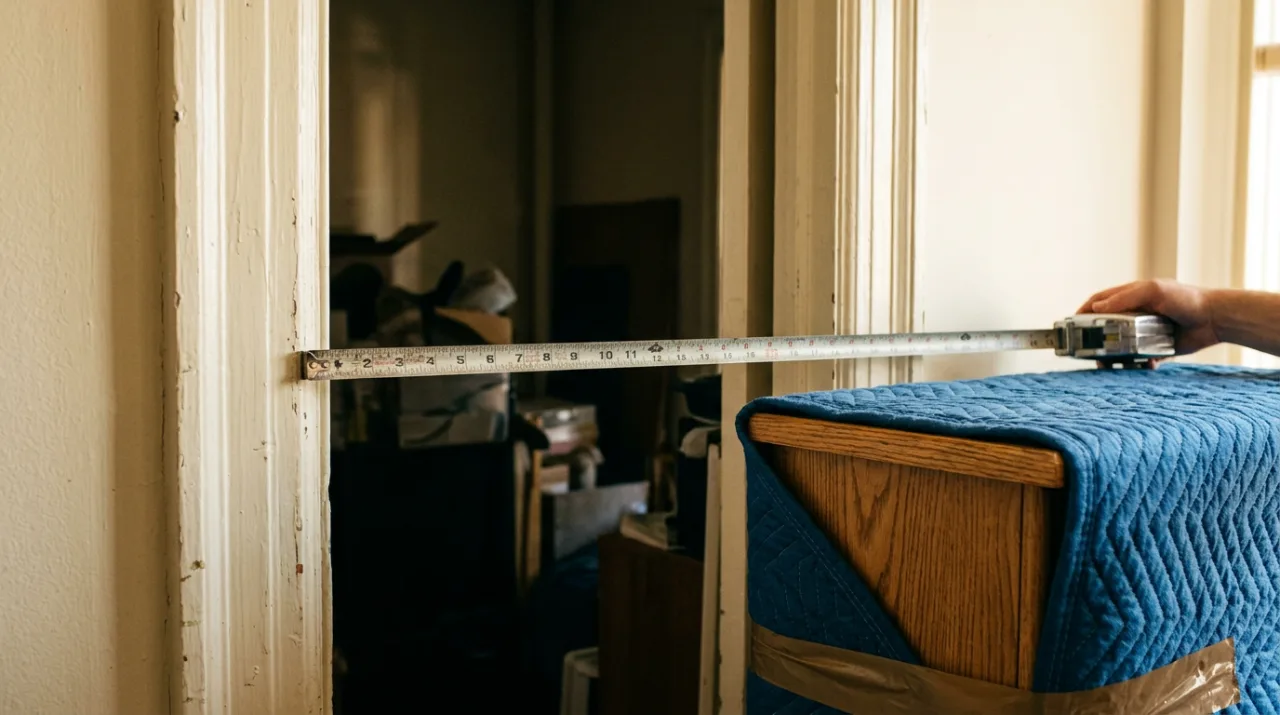
White-glove delivery typically means the crew carries the piece to the room, unpacks it, does light assembly such as attaching legs, and removes the packaging. Terms vary, so ask what is included, whether stairs or long carries cost extra, whether the crew will remove doors or legs if a piece is tight, and what happens if the piece will not fit. Before you book, check the route with the Will it fit calculator so you know which openings are tight.
Preparing for delivery day
Confirm the delivery window the day before, and ask the carrier to call ahead. Clear a path from the door to the room, protect floors at the entry if it is wet, and move small furniture and rugs out of the way. If you live in a building with an elevator or loading dock, book it with the building manager and ask about any certificate of insurance the building requires from movers. Have your measurements and the order paperwork to hand.
If you have pets or small children, plan to keep them away from the route while the crew carries heavy items. Make sure someone over the age the carrier requires will be home to sign.
Inspecting on arrival
Inspect the piece before the crew leaves, even if they are in a hurry. Unwrap it fully if you can, and look at every surface, including the back and underside. Open drawers and doors, check that legs are attached firmly and sit level, and look for scratches, dents, tears, stains and missing parts. Compare the colour, fabric and finish with what you ordered.
If you find damage, photograph it straight away, along with the box, labels and packing material. Write a short description of the damage on the delivery receipt before you sign it. Some carriers ask you to sign that the goods arrived in good condition; if they do not, sign only for what you have actually checked, and note "subject to inspection" or the specific damage. Keep the packaging until you are sure the piece is fine, since some sellers require it for a return or a claim.
When the order is late or never comes
Start with the paperwork: the order confirmation, the stated ship or delivery date, and any delay notice. Contact the seller in writing, by email or through the account messaging system, and ask for a firm date or a refund. Keep a copy of every message. If the order was placed online, by phone or by mail, check whether the seller sent a delay notice that offered you the choice to cancel, as the FTC rule requires.
If the seller does not respond or refuses a refund you believe you are owed, you can file a complaint with the FTC and with your state attorney general's consumer protection office. If you paid by credit card, your card issuer may have a dispute process with its own deadlines, so contact it promptly. This guide explains general rules; it is not legal advice for a specific dispute. For a large amount, consider speaking to a consumer protection lawyer or a legal aid office.
Deposits and stores that close
A long wait also leaves your deposit exposed for longer. If a store closes or a supplier fails while your order is pending, the money already paid is the money at risk, which is why Quebec's consumer protection office (Canadian guidance, not a US rule) advises paying as little as possible up front.3 Our guide to financing and deposits covers how to size a deposit and what to ask about getting it back.
Sources
- FTC, Business guide to the Mail, Internet, or Telephone Order Merchandise Rule (16 CFR 435). ftc.gov/business-guidance/resources/business-guide-ftcs-mail-internet-or-telephone-order-merchandise-rule
- FTC, Selling on the internet: prompt delivery rules. ftc.gov/business-guidance/resources/selling-internet-prompt-delivery-rules
- Office de la protection du consommateur (Quebec), Furniture advice. Canadian guidance. opc.gouv.qc.ca/en/consumer/good-service/goods/furniture/advice